Why Adult Vaccination Is Just as Important as Childhood Immunization
We've somehow decided vaccines are a childhood thing — like braces, or training wheels. They're not.

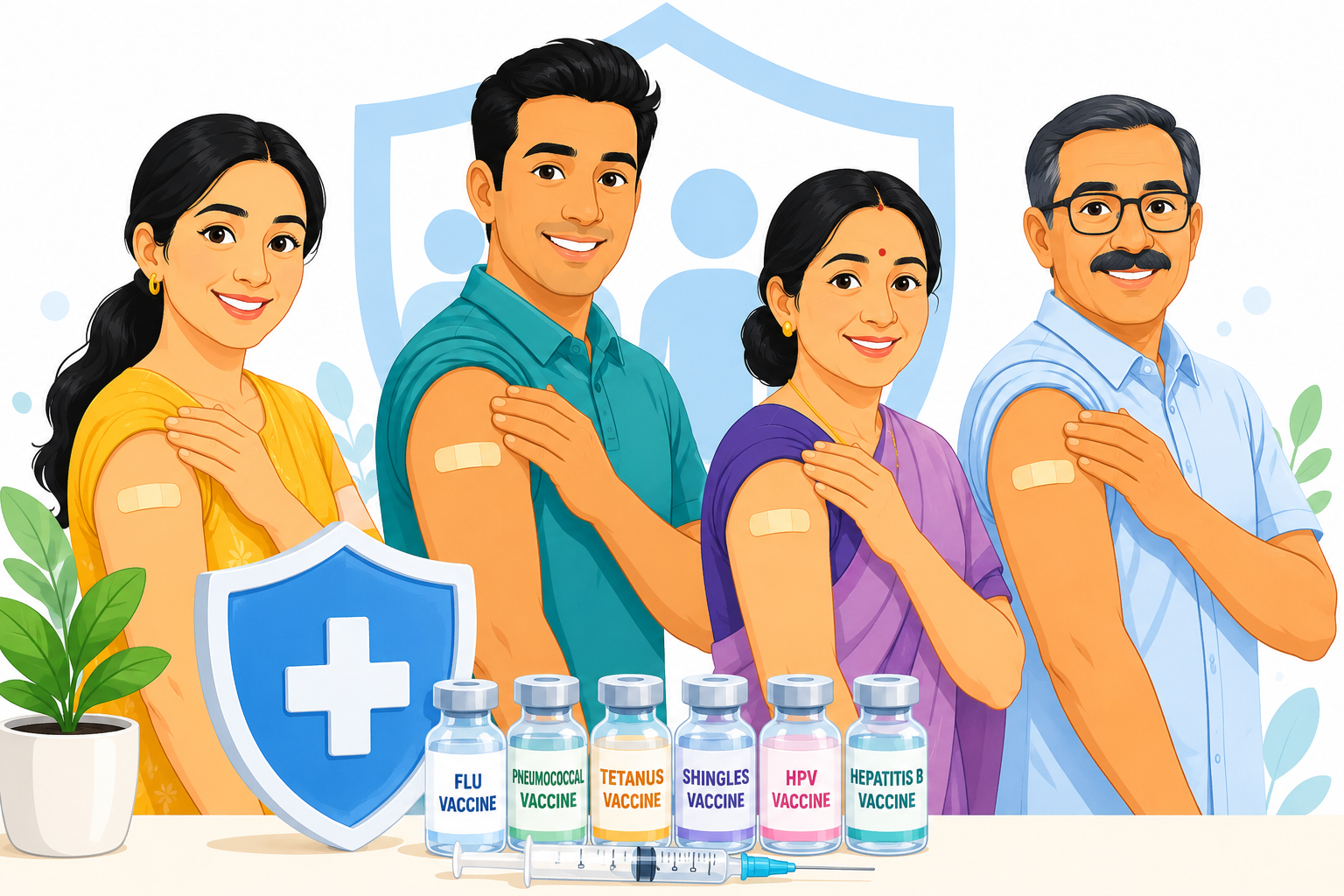
Ask a parent about their kid's vaccination schedule, and most can rattle it off from memory. Ask about their own, and you'll usually get a shrug. We've somehow decided vaccines are a childhood thing — like braces, or training wheels. They're not. Protection from those early shots fades. As we age, new risks emerge. More clinics are building immunization for adults into routine checkups now, instead of treating it as an afterthought. Both of those facts get ignored more often than they should.
What Is Vaccination?
Skip the textbook version for a second. In reality, a vaccine is nothing more than a rehearsal. Your immune system gets shown what a threat looks like — no actual infection involved, so if the real version ever shows up, it's not starting from scratch.
That's the entire mechanism, more or less. Recognize, respond faster. Everything written about vaccines afterward is commentary on that one idea.
Turning 18 doesn't switch it off. For plenty of people, the need for that rehearsal only grows from there.
Why Childhood Protection Doesn't Last Forever
Most patients have never heard this stated outright: a vaccine from age five isn't promised to still be working at fifty-five. Tetanus and pertussis are the textbook examples — antibody levels from those measurably decline over decades, which is exactly why adults are advised to get a tetanus shot roughly every ten years rather than treating childhood protection as permanent (CDC, Tetanus Vaccination).
Some vaccines were never built with childhood in mind at all. Shingles is the obvious one. Pneumococcal too. These target risks that only really turn up once a body's had decades to age — there was nothing to protect a five-year-old from, because the risk barely existed at five.
And underneath all of it: immune function itself slows with age. Immunosenescence, if you want the clinical term for it. An older immune system just responds differently. What's in someone's chart from three decades back doesn't change that.
Who This Actually Matters Most For
Everyone already knows the 60-plus part. Immune response weakens with age — not exactly breaking news.
Here's what gets missed more often: chronic illness carries equal weight, sometimes heavier. Diabetes. Heart disease. A lung or kidney condition that's been managed for years. Active cancer treatment. Pick any one of those, and the body's already stretched thin. That's part of why doctors bring up something as routine as a pneumonia vaccine more insistently with a patient managing lung disease than with an otherwise healthy adult in their thirties. The same infection that knocks a healthy person out for three days can put someone in this position in a hospital bed instead.
The Flu Vaccine Is Easy to Underestimate
Here's a question worth sitting with: why does this one need repeating every single year, when tetanus only needs a booster once a decade? Because flu strains actually shift — a little, but enough — each season. Last year's flu vaccine was built for last year's version of the virus.
For a healthy adult in their thirties, that mismatch barely matters. Rough week, a couple sick days, done. For someone older, or starting with weaker lungs, the same flu can turn into pneumonia before it's over.
That gap between those two outcomes is the whole argument for getting vaccinated annually — even for someone who feels completely fine heading into the season.
A quick aside, because it comes up constantly: plenty of people swear off their flu shot after one sore arm and a mild fever the next day. Understandable reaction. Rarely means anything beyond "your immune system noticed." Mention it at your next visit if it's bothering you. Just don't let one bad week turn into a decade of skipped seasons.
Pneumonia Is More Serious Than People Think
Nobody brings up pneumonia at dinner the way they bring up the flu. Odd, considering how serious it actually gets — particularly for older adults. Routine pneumococcal vaccination covers the bacteria behind a large share of those cases, along with related infections like meningitis, which get talked about even less.
There isn't one standard shot here, either. PPSV23 is one option; a newer conjugate version is another. Which one applies depends on age and medical history — not a single chart everyone follows (CDC Adult Immunization Schedule). And the guidance itself has shifted meaningfully over the last decade, so something someone was told ten years ago might not hold anymore.
Hepatitis B Deserves a Second Look, Even as an Adult
Back to that gap from the introduction. A lot of adults assume the hepatitis B vaccine they got in infancy handled things permanently — one and done, never think about it again. Not always accurate. Some people never completed the full childhood series in the first place. For others, immunity simply fades regardless of how thorough that original series was.
This one matters most for a specific group: healthcare workers, people managing diabetes, anyone with a chronic liver condition, and anyone whose work or lifestyle raises exposure risk. Worth a direct question next time you're at the clinic — not an assumption carried forward from a decision made decades ago, possibly by someone else.
The Vaccine You Remember After a Cut
Nobody thinks about tetanus until there's blood involved. By then it's already reactive thinking, not preventive. The actual recommendation has nothing to do with injuries at all — a dose of the tetanus vaccine roughly every ten years, on a schedule, regardless of what's happened to your skin lately (CDC, Tetanus Vaccination).
The bacteria live in ordinary soil and dust. Everywhere, basically. Being careful doesn't lower that exposure. Staying current on the booster does.
Two More Worth Knowing About
Shingles
Shingles and chickenpox come from the same virus, which surprises people every time. It can resurface decades after the chickenpox is long forgotten, sometimes with nerve pain serious enough to affect daily life, especially later in life. The (CDC recommends the vaccine) for adults 50 and older across the board, whether or not you remember having chickenpox as a kid.
HPV
HPV, meanwhile, gets filed away as strictly a teenage issue. It isn't. Catch-up vaccination runs through age 26 for anyone who missed it, and it's still worth discussing with a doctor between 27 and 45 on a case-by-case basis (CDC/ACIP HPV guidance). Quick question, next checkup, if that's you.
Why a Single Schedule Doesn't Work for Everyone
Not every adult vaccine behaves the same way, which is exactly where the confusion tends to start. Some are one dose and finished for life. Others need regular boosters on a set interval. A few — the influenza vaccine being the clearest case — are seasonal by nature and repeat annually, not a box checked once and forgotten.
Given that spread, a single generic checklist for every adult was never going to work well. What actually helps: a plan shaped around one person's age, health history, and specific risk factors. Not the same exercise as handing everyone the same printed sheet.
What Happens When This Gets Overlooked
The easy assumption is that skipping a vaccine just means slightly worse odds of catching something mild. For older adults, or anyone managing a chronic condition, that assumption gets expensive fast — a preventable infection turning into a hospital admission costs considerably more, in every sense, than the vaccine ever would have.
No vaccine erases risk completely. Saying otherwise wouldn't be honest. What it does is shift the odds meaningfully in your favor — and that shift matters more, not less, when something else is already working against you.
Key Takeaways
Childhood vaccine protection fades; it doesn't carry forward automatically into later adulthood, and immune response weakens naturally with age. People over 60, or managing diabetes, heart disease, chronic lung or kidney conditions, or cancer, carry real elevated risk from infections that are otherwise preventable. A well-timed hepatitis vaccine for adults belongs on that same list, alongside flu, pneumonia, tetanus, shingles, and HPV — all still relevant well past childhood, each on its own schedule. Some vaccines last a lifetime. Some need boosters. Some are strictly seasonal. Recommendations above reflect current CDC/ACIP guidance as of this review — confirm your specific plan with a doctor, since individual health history changes what actually applies to you.
Unsure Which Vaccines You're Actually Due For?
At Mallige Hospital, the team builds vaccination plans around each patient's real age, health history, and personal risk factors, rather than handing out a generic list to everyone. It's a small step today that can prevent a far more serious problem tomorrow.
📞 Call 080-67165555 View Health PackagesFrequently Asked Questions
Do I still need vaccines as an adult if I got all my shots as a kid?
Why does the flu dose need to be given every year instead of just once?
I had a bad reaction to my flu dose once — arm soreness and a mild fever. Should I stop getting it?
Who should be most concerned about adult vaccination?
Is there just one pneumonia vaccine?
I got vaccinated against hepatitis B as a baby — do I need to think about it again as an adult?
How often do I actually need a tetanus booster?
I already had chickenpox as a kid — does that mean I'm safe from shingles?
I'm in my twenties and missed the HPV vaccine as a teenager. Is it too late?
How do I know which vaccines I actually need?

About the Author
Mallige Hospital
Preventive Care & Immunization Team
Vaccination plans at Mallige Hospital are built around each patient's age, health history and personal risk factors — covering flu, pneumonia, tetanus, shingles, HPV and hepatitis B immunization for adults. View full profile & book a consultation →
About the Author
Mallige Hospital
Preventive Care & Immunization Team
Vaccination plans at Mallige Hospital are built around each patient's age, health history and personal risk factors — covering flu, pneumonia, tetanus, shingles, HPV and hepatitis B immunization for adults. View full profile & book a consultation →
This article is written for general awareness and does not replace personalised medical advice. If you're unsure which vaccines you're due for, please consult a qualified doctor at Mallige Hospital for an individual assessment.
How can we help?




Could not find what you are looking for?
Request a Callback