That Nightly Trip to the Bathroom? Your Prostate Might Be Trying to Tell You Something
Most men dismiss waking up to urinate as "just age." Often it is — but that doesn't mean you have to live with it. Here's what's really going on, and what your treatment options look like today.
Watch Reel
It starts small. Maybe you wake up once at night to use the bathroom. A few months later, it's twice. Then three times. You start planning outings around restroom locations. Long car rides make you anxious. You avoid that second glass of water after dinner.
Most men brush this off. "It's just age," they say. And honestly, that's partly true — but that doesn't mean you have to live with it.
What many men don't realise is that these urinary symptoms are often linked to a very common, very treatable condition called Benign Prostatic Hyperplasia (BPH) — or simply, prostate enlargement. A simple Uroflowmetry test can be one of the first steps to understanding what's actually going on. This article breaks it all down — what BPH is, what symptoms to look out for, and what your treatment options look like today.
What Is Prostate Enlargement — And Why Does It Happen?
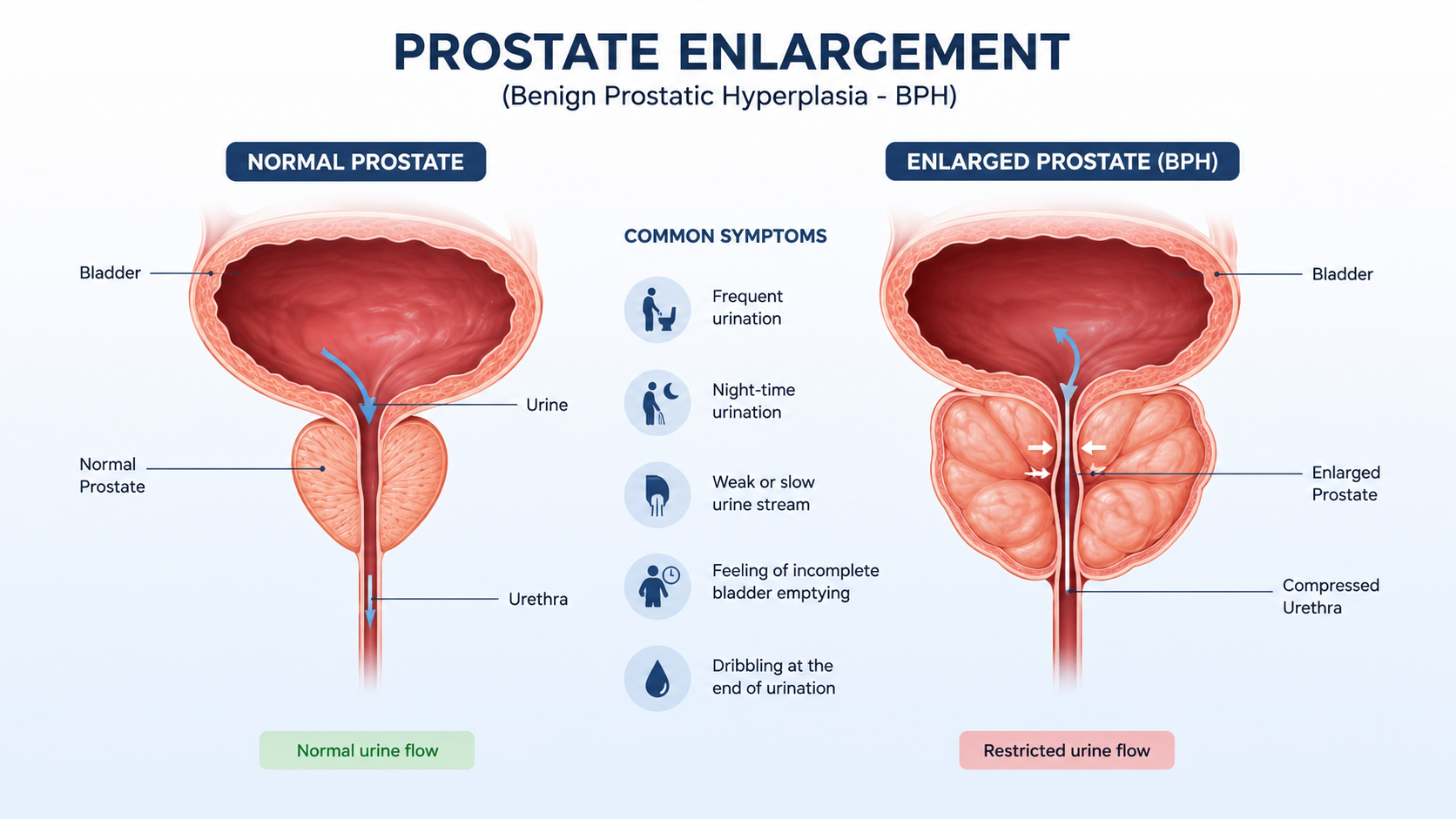
The prostate is a small, walnut-shaped gland that sits just below the bladder in men. Its primary job is to produce fluid that nourishes sperm. It wraps around the urethra — the tube that carries urine out of the body — which is exactly why an enlarged prostate causes so many urinary problems.
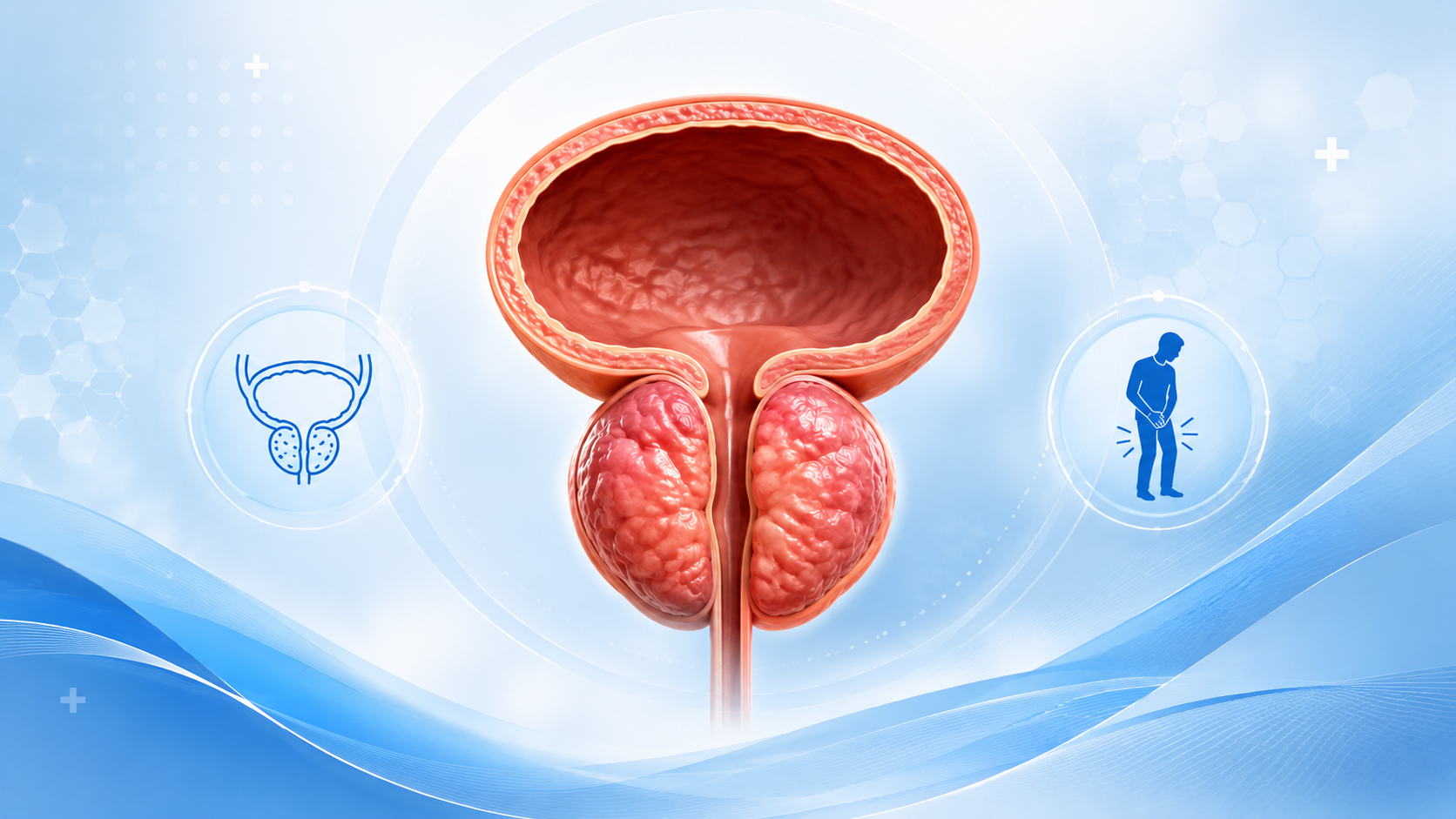
As men age, the prostate naturally grows. This is largely driven by hormonal changes — specifically shifts in testosterone and estrogen levels that occur as you get older. For some men, this growth stays manageable. For others, it presses on the urethra and creates a whole range of uncomfortable symptoms.
men will develop some degree of prostate enlargement in their lifetime. After age 60, it becomes even more common. BPH is benign — it's not a cancer risk in itself — but left unaddressed it can seriously affect your day-to-day comfort and quality of life.
Symptoms Men Commonly Ignore
This is where it gets important. Prostate enlargement doesn't always announce itself loudly. Symptoms tend to creep up slowly — so slowly that many men just adapt to them without realising anything is wrong. There are two broad categories of symptoms: obstructive and irritative.
Obstructive Symptoms
These happen because the enlarged prostate is physically blocking urine flow:
Slow or weak stream
Takes longer to empty the bladder than it used to.
Incomplete emptying
That feeling that you haven't fully gone, even after you have.
Dribbling after urination
Also called "dripping urine after peeing" — a few drops that leak out after you think you're done.
Straining to start
Having to push or wait before the stream begins.
Irritative Symptoms
These are about the bladder behaving differently than it should:
Urgency
A sudden, strong urge to urinate that's hard to hold back.
Frequency
Needing to go more often than usual, even if you don't drink much.
Nocturia
Nighttime urinary frequency — waking up once, twice or three+ times a night to urinate. Often what first prompts men to see a doctor.
Urge incontinence
Occasionally leaking urine before you can reach the bathroom.
When Should You See a Doctor?
A good rule of thumb: if your urinary symptoms are affecting your sleep, your confidence, or your daily routine — it's time to talk to a urologist.
Think about it this way. If you're avoiding evening events because you're worried about restrooms, if your partner notices you're up several times a night, if you feel embarrassed at work because of bathroom trips — that's a quality-of-life issue. And quality of life matters.
You don't have to wait until things get "bad enough"
Catching BPH earlier gives you more treatment options and usually leads to faster, simpler solutions. Excessive urination at night and urine dribbling are not things you need to silently accept.
Diagnosis — What Tests Will the Doctor Ask For?
If you visit a urologist with these symptoms, they'll typically run a few basic tests before recommending any treatment. Nothing here is complicated or invasive — it's mostly about getting a clear picture of what's happening.
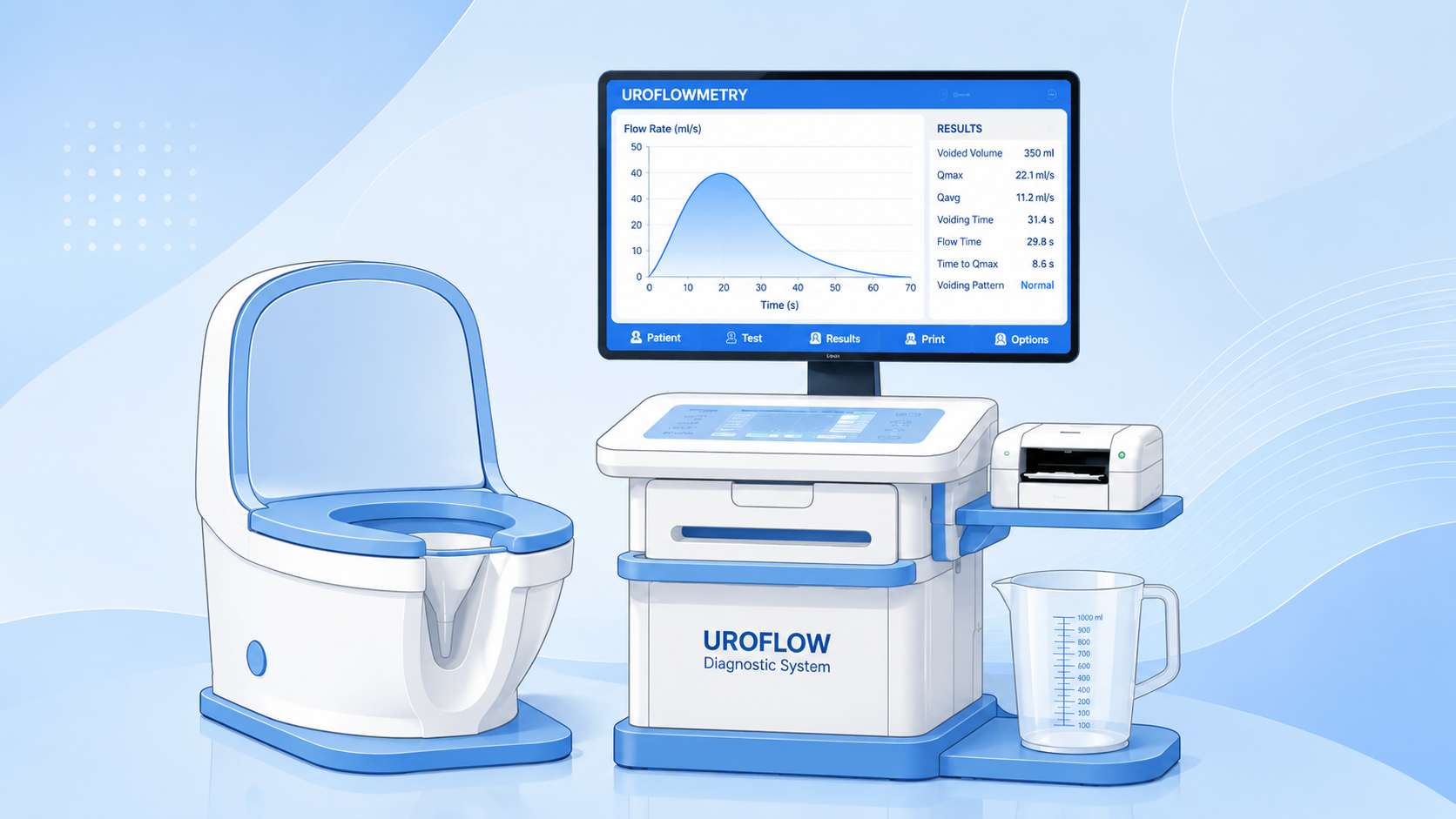
Uroflowmetry (Uroflow Test)
This is one of the simplest and most useful tests. You urinate into a special device that measures the speed and volume of your urine flow. The results help the doctor understand how much the prostate is affecting your urinary function. If you've been searching for a uroflowmetry test near you, it's widely available at urology clinics and most diagnostic centres. The uroflow test typically takes just a few minutes and is completely non-invasive.
Ultrasound KUB
KUB stands for Kidney, Ureter, and Bladder. This ultrasound scan, performed in our radiology department, shows the size of the prostate, checks how well the bladder is emptying, and rules out other causes like kidney stones or bladder issues.
Routine Urine Test
A standard urine analysis, processed in our NABL-accredited laboratory, checks for infection or blood in the urine — both of which can cause similar symptoms and need to be ruled out.
PSA and Creatinine Blood Tests
PSA (Prostate-Specific Antigen) is a blood marker that helps the doctor assess prostate health and, importantly, rule out prostate cancer. Creatinine is a kidney function test — done when there's concern that the urinary obstruction may be affecting the kidneys over time.
These tests together give your urologist a complete picture and help decide the best approach for you. The uroflow test is generally affordable and covered under most health insurance plans. Many of these investigations are also included in our men's health screening packages.
Treatment Options — A Step-by-Step Approach
The good news is that BPH is very treatable. And treatment doesn't automatically mean surgery. Doctors typically follow a stepwise approach — starting with the simplest options and escalating only if needed.
Lifestyle Modifications
For mild symptoms, simple changes can make a surprisingly significant difference:
- Reducing fluid intake in the evenings to cut down on nighttime urinary frequency
- Limiting caffeine and alcohol, which can irritate the bladder
- Double-voiding — urinating, waiting a moment, then trying again — to improve bladder emptying
- Bladder training exercises to gradually extend the time between bathroom visits
Many patients see meaningful improvement at this stage alone. It's always the first step.
Medications
When lifestyle changes aren't enough, medications are the next line of treatment. There are two main types:
- Alpha-blockers — relax the muscles around the prostate and bladder neck, improving urine flow quite quickly.
- 5-alpha reductase inhibitors — actually shrink the prostate over time by reducing the hormones that drive its growth.
Sometimes both are used together for better results. These tablets are generally well-tolerated and can significantly improve quality of life for most men.
Surgical Intervention
If medications don't provide enough relief — or if there's a complete inability to urinate — surgical treatment becomes the recommended path. Most modern procedures are minimally invasive, done through the urethra without external cuts.
Minimally Invasive Surgical Options — What's Available Today
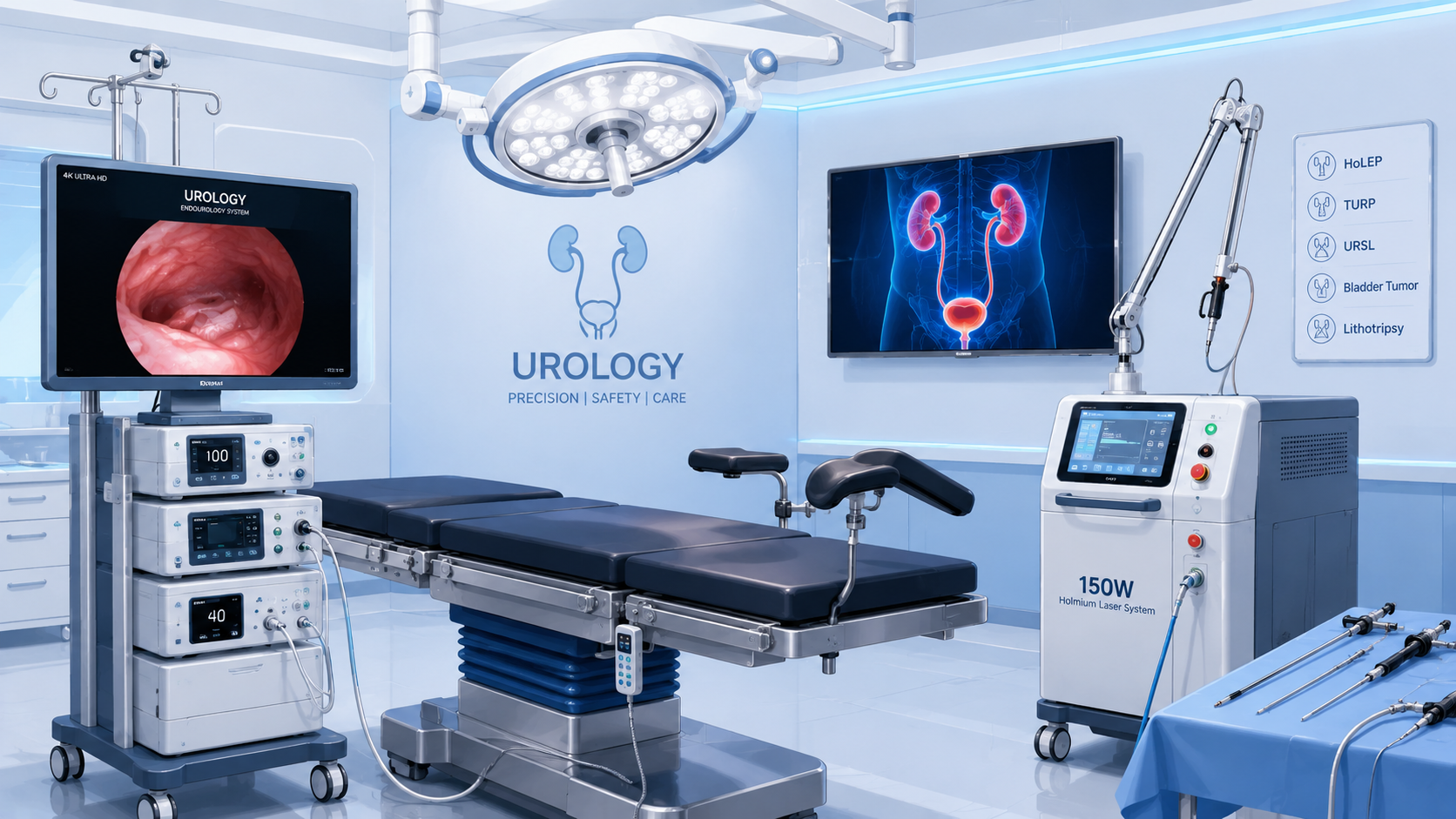
Surgery for prostate enlargement has come a long way. Most procedures today are minimally invasive, done under general or spinal anaesthesia, and don't require large incisions. Recovery times are short — typically a few days before most men are back to normal life.
HoLEP
Holmium Laser Enucleation of the Prostate uses laser energy to remove obstructing tissue. Long-lasting results, minimal blood loss, suitable even for very enlarged prostates. If you're looking for experienced HoLEP surgeons, look for a centre with a dedicated laser urology unit.
HoLEP Laser Prostatectomy
The laser-based evolution of traditional prostate surgery. Achieves the same thorough tissue removal as open surgery — but entirely through the urethra, with no external cuts. The holmium laser precisely enucleates the enlarged inner portion, leaving the outer shell intact. Most men go home within a day.
TURP
Transurethral Resection of the Prostate has been the gold standard for decades. A thin instrument is passed through the urethra to remove excess prostate tissue using electrical energy (monopolar or bipolar). Highly effective and very well-studied.
UroLift
A newer, non-cutting procedure where small implants are placed to hold the enlarged prostate tissue open — like pulling back curtains. No tissue is removed. Particularly suited for men who want to preserve sexual function. Recovery is very quick.
Rezum
Rezum uses water vapour (steam) therapy injected into the prostate tissue. The steam destroys the excess cells, and the prostate gradually shrinks over the following weeks. Done in a clinic setting and well-tolerated.
Aquablation
A robot-assisted procedure that uses a precise, high-pressure water jet to remove prostate tissue. Combines the effectiveness of TURP with improved precision — particularly for larger glands — while preserving surrounding structures.
All of these procedures are done without external cuts, typically completed in under an hour, and most men return home the next day. The right option depends on the size of the prostate, your overall health, and your personal priorities — something your urologist will help you decide. Many are performed as daycare procedures or with a single-night stay in our inpatient ward.
Recovery and Life After Treatment
Most men are pleasantly surprised by how quick recovery is. With minimally invasive procedures, you're looking at a few days of rest, a catheter for a short time in some cases, and then a gradual return to normal activities within one to two weeks.
Follow-up visits are part of the process, and your urologist will monitor your recovery with repeat uroflowmetry and imaging if needed.
Don't Suffer in Silence
Urinary symptoms in men are more common than most people talk about. But common doesn't mean something you just have to live with. BPH is one of the most well-understood and well-treated conditions in urology today.
Whether your symptoms are mild and just starting to bother you, or you've been managing this for years — there's a path forward. The first step is simply having the conversation with a urologist.
Don't let embarrassment or "it's not that bad yet" thinking hold you back. If your bladder is running your life — that's already bad enough to act on.
Take Back Your Nights. Take Back Your Confidence.
Our urology team at Mallige Hospital, Seshadripuram offers complete BPH evaluation — uroflowmetry, ultrasound KUB, PSA — and the full range of modern treatments from medication to HoLEP, TURP, UroLift, Rezum and Aquablation, all under one roof.
📞 Call 080-67165555 View Urology ServicesFrequently Asked Questions
Is prostate enlargement the same as prostate cancer?
What is a uroflowmetry test and does it hurt?
At what age should men start worrying about prostate health?
Can medications alone control BPH forever?
Is surgery for BPH risky?
Will treatment affect my sexual function?
How soon will I feel better after treatment?
About the Author
Dr. Prabhudev Salanki
Consultant Urologist · Mallige Hospital
Dr. Prabhudev Salanki is a Consultant Urologist at Mallige Hospital with extensive experience in the diagnosis and treatment of prostate disorders, kidney stones, and minimally invasive urological surgery — including HoLEP, TURP, UroLift, Rezum and Aquablation. View full profile & book a consultation →
This article is written for general awareness and does not replace personalised medical advice. If you have urinary symptoms or concerns about prostate health, please consult a qualified urologist at Mallige Hospital for an individual assessment.